July 29, 2026
Silverback Gorilla Behavior: What to Expect During a Trek
Encountering a silverback gorilla in the wild is the defining moment of any gorilla trekking safari in Uganda. Towering, powerful, and deeply intelligent, the silverback is not only the dominant male of a gorilla family but also its protector, decision-maker, and emotional anchor. Yet despite their intimidating size and strength, silverbacks are far more complex and controlled than most people imagine.
Understanding silverback gorilla behavior before your trek transforms the entire experience. Instead of simply observing animals in the forest, you begin to interpret movements, gestures, vocalizations, and social interactions that reveal a highly organized and emotionally rich society. Every chest beat, glance, or shift in posture carries meaning, and once you recognize these signals, the forest becomes far more alive.
At Monumental Gorilla Tours, our guides specialize in interpreting these behaviors during treks in Bwindi Impenetrable National Park and Mgahinga Gorilla National Park, helping visitors connect deeply with one of the world’s most endangered and intelligent animals.
Understanding the Role of the Silverback in Gorilla Society
The silverback is the heart of every mountain gorilla family. Named for the silver-gray hair that develops on his back after maturity, usually around the age of 12 to 15 years, the silverback is the dominant male responsible for guiding and protecting the group.
A typical mountain gorilla family consists of one silverback, several adult females, their offspring, and sometimes younger blackback males. While the silverback holds ultimate authority, his leadership style is not based on constant aggression. Instead, it is grounded in calm dominance, experience, and social intelligence.
One of the most important things to understand about silverback gorilla behavior is that leadership is primarily about stability. The silverback decides where the group feeds, when it moves, and where it nests at night. He also mediates conflict, protects infants, and maintains order within the group.
During a gorilla trekking in Uganda experience, visitors quickly notice that the silverback is almost always alert but rarely chaotic. He observes quietly, intervenes only when necessary, and maintains a steady presence that keeps the entire group calm.
First Impressions When You Encounter a Silverback
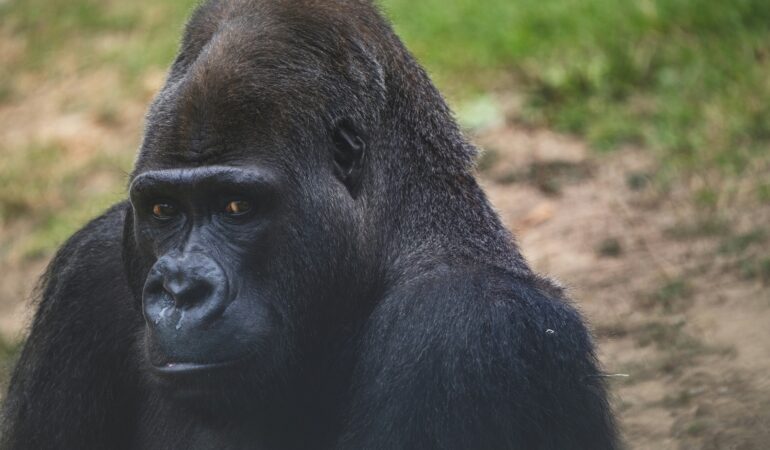
The moment you first see a silverback in the wild is often overwhelming. His sheer size can exceed 180 to 200 kilograms, with broad shoulders, deep-set eyes, and a muscular build that reflects years of dominance and survival in dense rainforest terrain.
However, what surprises most visitors is not aggression but calmness. A habituated silverback is typically composed, observant, and aware of human presence without feeling threatened.
During gorilla trekking safaris, guides ensure visitors maintain a safe distance, allowing the silverback to continue his natural behavior. In many cases, he may sit feeding, rest under vegetation, or simply observe the group quietly while juveniles play nearby.
Eye contact with a silverback is often described as one of the most profound wildlife moments in Africa. It can feel both powerful and strangely familiar due to the close genetic relationship between humans and gorillas.
Protective Behavior and Family Security
One of the most important aspects of silverback gorilla behavior is protection. The silverback constantly monitors his surroundings for potential threats, including rival gorilla groups, predators such as leopards, or unfamiliar disturbances.
If he senses danger, his response is immediate and strategic. Rather than attacking instantly, he often begins with visual displays such as standing upright, vocalizing, or chest beating to intimidate intruders and avoid physical confrontation.
If the threat persists, the silverback positions himself between the danger and vulnerable members of the group, especially infants and females. This protective instinct is central to the survival of the entire family.
During a gorilla trekking Uganda experience, visitors may witness these defensive behaviors if another group of gorillas is nearby or if the silverback feels the need to assert dominance over territory.
Chest Beating: Communication, Not Just Aggression
One of the most iconic images in wildlife tourism is the silverback beating his chest. While often interpreted as aggression, chest beating is actually a multi-purpose form of communication.
In many cases, chest beating serves as a warning signal to distant rivals or a demonstration of strength to avoid direct confrontation. It can also be used to assert identity or maintain social order within the group.
The sound produced by chest beating can travel long distances through dense forest, making it an effective communication tool in environments where visibility is limited.
During gorilla trekking safaris, guides often explain that chest beating is rarely followed by violence. Instead, it is part of a complex communication system that helps maintain stability within and between gorilla families.
Leadership Without Constant Violence
Unlike many assumptions about dominant males in the animal kingdom, silverbacks do not rule through constant aggression. In fact, excessive violence would weaken the group and reduce survival chances.
Instead, leadership is maintained through a balance of strength, experience, and restraint. A successful silverback earns respect not only through physical power but also through his ability to protect infants, maintain group cohesion, and make decisions that benefit the entire family.
When conflict does occur within the group, it is usually resolved through brief displays of dominance rather than prolonged fighting.
This behavioral balance is one of the most fascinating aspects of silverback gorilla behavior, highlighting the intelligence and social complexity of these endangered primates.
Interaction With Females and Infants
A silverback’s relationship with females and infants is central to the stability of the group. Adult females rely on him for protection, while infants grow up under his watchful presence.
Silverbacks are generally tolerant and gentle with infants. It is common to see young gorillas playing near or even climbing on a resting silverback. In many cases, he remains still, allowing them to interact freely.
This tolerance plays a crucial role in social development. Infants learn trust, social boundaries, and group behavior within the safety of the silverback’s protection.
Female gorillas, on the other hand, maintain close social bonds with the silverback while also forming relationships with each other. The silverback’s role includes maintaining harmony among females, especially during feeding or movement.
These interactions are frequently observed during Bwindi gorilla trekking, offering visitors a rare glimpse into a highly structured and emotionally complex society.
Silverback Decision-Making and Daily Movement
Every day in the life of a mountain gorilla family is guided by the silverback’s decisions. He determines when the group wakes, where it feeds, how long it stays in one area, and where it builds nests for the night.
These decisions are not random. The silverback uses experience, environmental awareness, and memory to select optimal feeding locations and safe resting areas.
During gorilla trekking in Uganda, guides often explain how trackers follow signs of movement such as broken vegetation, fresh nests, and feeding trails, all of which are indirectly shaped by the silverback’s decisions.
This leadership role highlights another layer of intelligence, showing that silverbacks are not only physically dominant but also cognitively strategic.
Aggression Between Rival Silverbacks
While most interactions within a family are calm, encounters between rival silverbacks can be highly intense. These encounters usually occur when groups overlap in territory or when solitary males attempt to challenge an established leader.
However, even in these situations, violence is often avoided. Displays such as vocalizations, charging, and chest beating are typically enough to determine dominance without physical conflict.
Actual fights are rare because injury could threaten survival. Instead, the outcome is usually decided through intimidation and display behavior.
Understanding this helps visitors appreciate that silverback gorilla behavior is not defined by constant fighting but by calculated risk management.
How Silverbacks Communicate
Communication is central to silverback leadership. Beyond chest beating, silverbacks use a range of vocalizations, body postures, and facial expressions to guide the group.
Low grunts may signal calm movement, while sharp vocalizations can indicate alertness or warning. Subtle gestures often direct group movement or maintain spacing within dense vegetation.
This communication system ensures that even in thick rainforest where visibility is limited, the family remains coordinated and connected.
During a gorilla trekking safari, visitors often notice how silently the group moves yet remains perfectly synchronized under the silverback’s guidance.
Emotional Intelligence in Silverbacks
One of the most remarkable discoveries in primate research is the emotional intelligence of silverbacks. They are capable of displaying empathy, patience, frustration, curiosity, and even grief.
Silverbacks often show strong protective instincts toward injured or distressed group members. They may remain close to sick individuals, allowing them to move at their own pace while ensuring safety.
This emotional awareness strengthens group cohesion and reflects the deep evolutionary connection between gorillas and humans.
Such behavior is frequently observed during gorilla trekking in Bwindi, where visitors witness moments of tenderness that challenge traditional perceptions of wild animals.
What to Expect During a Gorilla Trek Encounter
When you finally encounter a silverback during your trek, the experience is carefully managed to ensure safety for both visitors and gorillas. You will be guided to maintain distance, remain calm, and avoid sudden movements.
The silverback may observe you quietly, continue feeding, or remain alert but relaxed. In most cases, habituated gorillas are comfortable with human presence as long as boundaries are respected.
Your hour with the gorilla family is structured to minimize disturbance while allowing you to observe natural behaviors, including silverback leadership, family interaction, and social dynamics.
This controlled interaction is what makes gorilla trekking safaris in Uganda both safe and deeply meaningful.
Experience Silverback Gorilla Behavior with Monumental Gorilla Tours
Understanding silverback gorilla behavior before your trek completely transforms how you experience the forest. Every movement becomes meaningful, every interaction tells a story, and every moment with the gorilla family becomes more profound.
At Monumental Gorilla Tours, we specialize in guided gorilla trekking Uganda experiences that combine expert interpretation with seamless logistics. Our guides help you understand silverback behavior in real time, turning your trek into an educational and emotional journey.
We offer tailor-made safaris to Bwindi Impenetrable National Park and Mgahinga Gorilla National Park, along with extensions to Queen Elizabeth National Park, Murchison Falls, and Kibale Forest for chimpanzee trekking.