November 19, 2025
How Many Gorillas Are Left in the Wild? A Complete Guide to Gorilla Populations in Africa
Gorillas are among the world’s most magnificent and intelligent primates—gentle yet powerful, social yet mysterious. Unfortunately, they are also some of the most endangered animals on the planet, facing threats from habitat loss, poaching, disease, and human conflict. Understanding how many gorillas are left in the wild is essential for appreciating their conservation status and supporting ongoing efforts to protect them.
Today, Africa is home to four gorilla subspecies, each with a different population size, distribution, and level of threat. Conservation organizations and governments work tirelessly to monitor these populations and ensure their survival, supported significantly by responsible tourism such as gorilla trekking.
In this comprehensive guide, we break down the population of each subspecies and explore how tourism with operators like Monumental Gorilla Tours makes a positive impact.
How Many Gorillas Are Left in the Wild in Total?
Across all subspecies combined, scientists estimate that there are roughly:
➤ About 316,000 gorillas left in the wild.
However, this number is heavily skewed because western lowland gorillas make up the vast majority of the total population. The other subspecies—mountain gorillas, eastern lowland gorillas, and Cross River gorillas—remain critically endangered.
Let’s break it down.
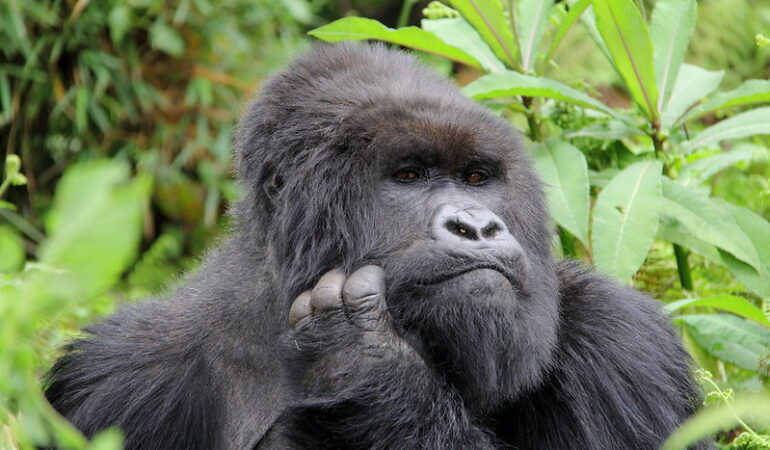
1. Mountain Gorillas – About 1,063 Left
Mountain gorillas (Gorilla beringei beringei) are the rarest great apes. They are found only in two isolated regions:
-
Bwindi Impenetrable National Park (Uganda)
-
The Virunga Massif, which spans:
-
Volcanoes National Park (Rwanda)
-
Mgahinga Gorilla National Park (Uganda)
-
Virunga National Park (DR Congo)
-
Current Mountain Gorilla Population:
≈ 1,063 individuals
This number represents a slow but promising recovery thanks to intensive conservation efforts.
Why Mountain Gorillas Are Increasing
-
Strict anti-poaching patrols
-
Community revenue sharing
-
Gorilla veterinary programs
-
Responsible trekking tourism
Countries like Uganda and Rwanda have established strong gorilla tourism policies that protect these majestic primates while supporting local livelihoods.
To visit mountain gorillas responsibly, explore Uganda or Rwanda trips at:
👉 https://monumentalgorillatours.com/uganda-gorilla-tours/
👉 https://monumentalgorillatours.com/rwanda-gorilla-tours/
2. Eastern Lowland Gorillas – About 3,800 Left
Eastern lowland gorillas, also known as Grauer’s gorillas, are the largest gorilla subspecies. They live only in the eastern Democratic Republic of Congo, primarily in:
-
Kahuzi-Biega National Park
-
Surrounding lowland rainforests
Current Eastern Lowland Gorilla Population:
≈ 3,800 individuals
Unfortunately, these gorillas have experienced a significant decline over the past three decades—dropping from an estimated 17,000 to fewer than 4,000 today.
Main Threats
-
Illegal mining
-
Habitat loss
-
Civil conflict
-
Poaching
Still, conservation programs and tourism in Kahuzi-Biega are helping stabilize some groups.
3. Western Lowland Gorillas – About 300,000 Left
Western lowland gorillas (Gorilla gorilla gorilla) are the most widespread and numerous gorilla subspecies. They inhabit the remote forests of:
-
Gabon
-
Cameroon
-
Central African Republic
-
Congo Brazzaville
-
Equatorial Guinea
-
Northern Angola
Current Western Lowland Gorilla Population:
≈ 300,000 individuals
Despite their large population, they are still considered critically endangered due to:
-
High rates of poaching
-
Illegal bushmeat trade
-
Ebola outbreaks
-
Logging and habitat destruction
Their remote habitats make population monitoring challenging, so real numbers may slightly vary.
4. Cross River Gorillas – About 300 Left
Cross River gorillas (Gorilla gorilla diehli) are the rarest and most threatened gorilla subspecies. They live in a small mountainous forest region between:
-
Nigeria
-
Cameroon
Current Cross River Gorilla Population:
≈ 300 individuals
They are extremely shy and live in rugged terrain, making them very difficult to study or see.
Threats to Cross River Gorillas
-
Human encroachment
-
Habitat fragmentation
-
Poaching
-
Small population size (inbreeding risk)
Conservation groups are working to connect fragmented forest patches to help the population recover.
Summary of Gorilla Populations Worldwide
| Gorilla Subspecies | Estimated Population | Conservation Status | Location |
|---|---|---|---|
| Mountain Gorilla | ~1,063 | Endangered | Uganda, Rwanda, DR Congo |
| Eastern Lowland Gorilla | ~3,800 | Critically Endangered | DR Congo |
| Western Lowland Gorilla | ~300,000 | Critically Endangered | Central & West Africa |
| Cross River Gorilla | ~300 | Critically Endangered | Nigeria & Cameroon |
Why Are Gorillas Endangered?
Despite their strength, intelligence, and adaptability, gorillas face numerous human-driven threats. Understanding these threats is key to supporting their conservation.
1. Habitat Loss
As human populations expand, forests are cleared for:
-
Agriculture
-
Mining
-
Settlements
-
Timber harvesting
Gorillas lose both food and shelter, leading to declining populations.
2. Poaching and Illegal Wildlife Trade
While gorillas are rarely hunted intentionally today, they often fall victim to:
-
Wire snares set for antelopes
-
Illegal bushmeat trade
-
Capture of infants for trafficking
Even accidental injuries can be fatal to gorillas.
3. Disease
Gorillas share 98% of DNA with humans, meaning they can catch:
-
Flu
-
Tuberculosis
-
COVID-19
-
Hepatitis
-
Ebola
Ebola outbreaks alone have wiped out up to 90% of gorilla populations in certain regions.
4. Civil Conflict
Especially in DR Congo, gorilla habitats are often affected by:
-
Armed rebels
-
Conflict over mining resources
-
Insecurity preventing conservation patrols
This disrupts decades of conservation efforts.
5. Climate Change
Changing rainfall and temperature patterns affect:
-
Fruit availability
-
Vegetation density
-
Gorilla migration routes
How Conservation Efforts Are Helping Gorilla Populations Recover
Despite the challenges, gorillas—especially mountain gorillas—have shown remarkable recovery thanks to focused conservation strategies.
1. Gorilla Tourism
Responsible tourism creates financial incentives for governments and communities to protect wildlife. A portion of permit fees goes directly to:
-
Ranger salaries
-
Anti-poaching patrols
-
Veterinary programs
-
Community projects
-
Habitat protection
By trekking gorillas, tourists support their survival.
To plan a responsible gorilla trek, visit:
👉Monumental Gorilla Tours and Safaris.
2. Community Involvement
Local communities play a crucial role in gorilla conservation. Programs include:
-
Revenue sharing
-
Job creation
-
Conservation education
-
Sustainable farming support
Communities become protectors rather than threats.
3. Research & Monitoring
Daily monitoring of gorilla families ensures:
-
Poaching threats are deterred
-
Sick gorillas receive treatment
-
Orphaned infants are rescued
-
Habituation helps gorillas tolerate tourism
4. Protected Areas and Laws
All gorilla habitats are in protected national parks. Strict laws punish poaching and habitat destruction.
Why Mountain Gorillas Are the Only Subspecies With Increasing Numbers
Mountain gorillas are the only great apes in the world whose numbers are increasing, thanks to:
-
Controlled trekking tourism
-
Strong veterinary care
-
Consistent monitoring
-
Government collaboration
-
Global conservation funding
This success story proves that tourism can be a powerful conservation tool.
Can Gorillas Be Saved?
Yes—but only if conservation efforts continue and expand.
Ensuring the long-term survival of gorillas requires:
-
Support for conservation organizations
-
Responsible travel choices
-
Funding for anti-poaching teams
-
Protection of forest corridors
-
Community-focused projects
Gorillas are resilient and can recover if given a chance.
How You Can Help Protect Gorillas
Even as a traveler or wildlife lover, you can make a difference:
-
Choose responsible tour operators like Monumental Gorilla Tours
-
Avoid supporting wildlife trafficking
-
Donate to conservation organizations
-
Educate others about gorilla conservation
-
Visit gorilla destinations to support eco-tourism
Final Thoughts
There are roughly 316,000 gorillas left in the wild, but most belong to a single subspecies—the western lowland gorilla. The other three subspecies face critical risks, with mountain gorillas and Cross River gorillas needing the most protection.
The good news? Conservation efforts are working, especially in Uganda and Rwanda, where mountain gorilla numbers continue to rise. Tourism plays a vital role in funding these programs.
To experience these gentle giants firsthand and support their future, explore guided gorilla safaris at:
👉Monumental Gorilla Tours and Safaris.