July 29, 2026
Gorilla Baby Season Uganda: When Are Gorilla Infants Born?
Mountain gorillas are among the most carefully studied and deeply admired animals on the planet, and few moments in their life cycle capture more fascination than the birth of a newborn infant. The idea of a “gorilla baby season Uganda” often attracts attention from travelers planning a gorilla trekking safari, as many hope to witness playful infants clinging to their mothers in the misty forests of Bwindi or Mgahinga.
However, unlike some wildlife species that give birth during specific seasonal windows, mountain gorillas do not have a fixed breeding season. Instead, gorilla infant births occur throughout the year, shaped by biological cycles, social dynamics, and environmental stability rather than a strict calendar period.
Understanding when gorilla babies are born, how they are raised, and why Uganda’s forests remain one of the most important strongholds for reproduction offers a deeper appreciation of these endangered great apes. For visitors trekking with Monumental Gorilla Tours, encountering a gorilla infant in the wild is often one of the most emotional highlights of the entire safari experience.
Understanding Gorilla Reproduction in Uganda
The reproductive system of mountain gorillas is continuous rather than seasonal. Female gorillas experience menstrual cycles similar in structure to other great apes, and conception can occur at any time of the year once conditions within the group and environment are favorable.
This means that there is no defined “gorilla baby season Uganda” in the way tourists might expect. Instead, births are distributed evenly across months, resulting in infants of different ages being present in gorilla families year-round.
Female mountain gorillas typically give birth to a single infant after a gestation period of about eight and a half months. Twins are extremely rare, and when they do occur, survival rates can be low due to the intensive care required.
Because gorillas live in stable social groups, infant survival depends heavily on the protection provided by the silverback, the care of the mother, and the overall stability of the family structure.
Why Gorillas Do Not Have a Fixed Baby Season
Unlike many herbivores in Africa that time births to coincide with food abundance, mountain gorillas inhabit high-altitude rainforests where vegetation is available throughout the year. The consistent availability of food reduces the need for synchronized breeding cycles.
Instead of relying on seasonal cues, gorilla reproduction is influenced more by social and biological factors. Females may become receptive based on hormonal cycles, group stability, and the presence of a dominant silverback capable of protecting offspring.
This reproductive flexibility is one of the reasons mountain gorillas have been able to survive in such challenging environments. It ensures that births are spread across time, reducing competition for resources and allowing mothers to focus fully on raising their infants.
For travelers planning gorilla trekking in Uganda, this means that sightings of newborns or very young infants are possible at any time of the year, although their frequency varies depending on the specific gorilla families being visited.
Where Most Gorilla Babies Are Born in Uganda
Uganda is home to more than half of the world’s remaining mountain gorilla population, primarily found in Bwindi Impenetrable National Park and Mgahinga Gorilla National Park. These protected areas provide dense, high-altitude rainforest environments that are ideal for reproduction and infant development.
Bwindi alone contains several habituated gorilla families, each with different reproductive histories. Some groups may have multiple infants of varying ages, while others may experience new births following the transfer of females between groups.
Because gorilla families are carefully monitored by researchers and park authorities, Uganda has become one of the most important regions for studying infant gorilla development and long-term population trends.
During a trek with Monumental Gorilla Tours, visitors may encounter families with infants clinging tightly to their mothers, juveniles exploring their surroundings, or pregnant females preparing for future births.
The First Days of a Gorilla Infant’s Life
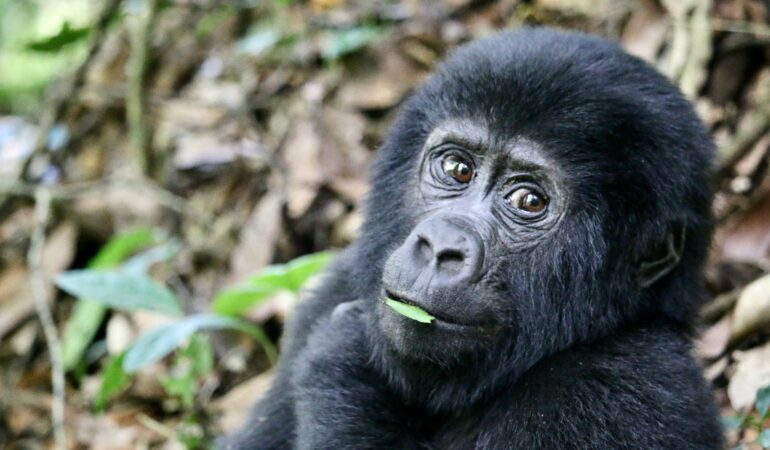
When a mountain gorilla infant is born, it immediately clings to its mother’s chest using strong grasping reflexes. Unlike many mammals, newborn gorillas are highly dependent from the very beginning and rely entirely on maternal care for survival.
The mother carries the infant almost constantly during the first months of life, protecting it from environmental hazards, cold temperatures, and potential threats. She nurses frequently, maintains physical contact, and ensures the infant remains secure during movement through the forest.
The silverback plays an equally important protective role, guarding the group and ensuring that no external danger disrupts the infant’s early development. This combination of maternal care and group protection creates one of the most stable environments for infant survival among wild primates.
For visitors on gorilla trekking safaris, observing this early bond between mother and infant is often described as one of the most emotional wildlife experiences in Africa.
Infant Development and Early Growth
Gorilla infants develop slowly compared to many other mammals. During the first few months, they remain almost entirely dependent on their mothers for warmth, nutrition, and transport. As they grow stronger, they begin to explore their surroundings while still staying close to their mother’s body.
By around three to four months of age, infants start to interact more with other members of the group. They may reach out to touch juveniles, observe adults feeding, or engage in simple play behaviors.
As they approach one year of age, gorilla infants become increasingly curious and mobile. They begin experimenting with movement, climbing small branches, and participating in early social interactions.
This gradual development process is essential for learning survival skills, social behavior, and environmental awareness.
The Role of the Silverback in Infant Protection
The silverback is central to the survival of every infant gorilla. As the dominant male and leader of the group, he provides protection from external threats and maintains order within the family.
Silverbacks are highly attentive to infants, often allowing them to play near their bodies or even rest against them. This calm and tolerant behavior helps reinforce group stability and ensures that infants grow up in a secure environment.
If danger approaches, the silverback positions himself between the threat and the vulnerable members of the group, using displays of strength such as chest beating, vocalizations, and assertive movement to deter intruders.
This protective role is one of the defining characteristics of mountain gorilla social structure, ensuring that infants have the best possible chance of survival.
Infant Mortality and Conservation Challenges
Despite strong parental care, infant gorillas face significant challenges in the wild. Natural causes of mortality include disease, accidental injuries, and, in rare cases, instability caused by changes in group leadership.
Infant survival is closely linked to the stability of the silverback’s leadership. When a dominant male dies or is displaced, infants may become vulnerable as new males take over the group. In some cases, infanticide can occur, although this is relatively rare and typically associated with reproductive competition.
Conservation efforts in Uganda have significantly improved infant survival rates in recent decades. Veterinary interventions, strict tourism regulations, anti-poaching patrols, and continuous monitoring by park authorities have all contributed to increasing gorilla population numbers.
The steady rise in mountain gorilla populations in Bwindi and surrounding regions is one of Africa’s most important conservation success stories.
How Gorilla Infants Learn Social Behavior
Gorilla infants learn primarily through observation and imitation rather than direct instruction. They watch their mothers feed, observe interactions between adults, and gradually begin to replicate behaviors during play.
Social learning is a crucial part of development. Infants learn how to communicate using vocalizations and body language, how to interact respectfully within the group hierarchy, and how to recognize social boundaries.
Play is particularly important during this stage. Young gorillas wrestle, chase, climb, and explore their environment while developing coordination and confidence.
Older juveniles often act as companions and role models for infants, helping bridge the gap between dependency and independence.
This learning process is a key indicator of gorilla intelligence, demonstrating advanced cognitive development within social contexts.
Emotional Bonds Between Mothers and Infants
The relationship between a gorilla mother and her infant is one of the strongest bonds observed in the animal kingdom. Mothers are highly attentive, responsive, and protective throughout the early years of development.
Infants rely on their mothers not only for physical survival but also for emotional security. When frightened, they immediately seek contact, often clinging tightly or hiding within their mother’s fur.
Even as they grow older and become more independent, young gorillas maintain close emotional connections with their mothers for several years.
These bonds contribute significantly to the stability of the entire gorilla family structure and are frequently observed during gorilla trekking in Uganda, where visitors witness tender interactions that closely resemble human family behavior.
Is There a Best Time to See Gorilla Babies in Uganda?
Although there is no official “gorilla baby season Uganda,” certain periods may increase the likelihood of seeing younger infants. Because births occur year-round, travelers can encounter newborns at any time, but the visibility of infants depends largely on their age and the specific family being visited.
Younger infants are often more visible when they are active and clinging to their mothers during movement. As they grow older, they become more playful and curious, increasing the chances of engaging behavior during trekking encounters.
The dry seasons are generally more comfortable for trekking, making it easier to access gorilla families and spend quality time observing their behavior, including infants of various ages.
However, even during wetter months, gorilla trekking remains possible and rewarding, with lush vegetation providing beautiful photographic opportunities.
Responsible Tourism and Protecting Gorilla Infants
Because infant gorillas are highly vulnerable, strict rules govern all gorilla trekking safaris in Uganda. Visitors are required to maintain a safe distance, avoid direct contact, and follow the guidance of experienced park rangers at all times.
These regulations are essential to preventing disease transmission and minimizing stress on gorilla families. Human respiratory illnesses, in particular, can pose serious risks to infants due to their developing immune systems.
Revenue generated through gorilla trekking permits directly supports conservation programs, veterinary care, habitat protection, and community development initiatives that benefit both wildlife and local populations.
Every trek contributes to the long-term survival of mountain gorillas and helps ensure that future generations will continue to witness infant gorillas growing within their natural habitats.
Experience Gorilla Families with Monumental Gorilla Tours
Observing a gorilla infant in the wild is one of the most powerful wildlife experiences in Africa. It transforms conservation from an abstract idea into a deeply personal connection with one of our closest living relatives.
At Monumental Gorilla Tours, we design expertly guided gorilla trekking in Uganda experiences that allow travelers to witness these extraordinary moments while learning about gorilla behavior, reproduction, and conservation.
Our itineraries include carefully selected routes through Bwindi Impenetrable National Park and Mgahinga Gorilla National Park, with options for luxury, mid-range, and private safaris tailored to your travel preferences.
We also offer combined wildlife experiences including chimpanzee trekking, savannah safaris in Queen Elizabeth National Park, and cultural encounters with local communities.