July 6, 2026
Kibale National Park Primate Walk: What to See
Kibale National Park is widely regarded as the primate capital of East Africa, and the Kibale National Park primate walk offers one of the most immersive forest wildlife experiences in Uganda. Unlike traditional game drives, this guided forest walk places visitors directly inside a dense tropical ecosystem where chimpanzees, colobus monkeys, mangabeys, and countless forest species live in close ecological balance.
For travelers seeking a deeper connection with Uganda’s rainforest biodiversity, Kibale delivers an experience that is both scientifically rich and emotionally memorable. Every step through the forest reveals new sounds, movements in the canopy, and interactions between species that define one of Africa’s most complex ecosystems.
At Monumental Gorilla Tours, Kibale is often included in primate-focused itineraries that combine chimpanzee tracking, Bigodi Wetland birding, and extended Uganda safari circuits that connect with Queen Elizabeth National Park and Bwindi Impenetrable Forest.
Overview of Kibale National Park Primate Walk Experience
The primate walk in Kibale National Park Uganda is a guided trekking experience conducted within a tropical rainforest known for hosting the highest density of primates in Africa. The park covers approximately 795 square kilometers and is located in western Uganda, connecting with the larger Albertine Rift ecosystem.
Unlike chimpanzee tracking, which focuses specifically on locating habituated chimpanzee groups, a primate walk offers a broader ecological perspective. Visitors encounter multiple primate species while also observing forest birds, butterflies, and plant life that contribute to the forest’s biodiversity.
The experience is structured to allow slow, interpretive walking through designated trails led by Uganda Wildlife Authority rangers and professional guides who explain animal behavior, plant ecology, and forest dynamics.
Chimpanzees: The Star Attraction of Kibale
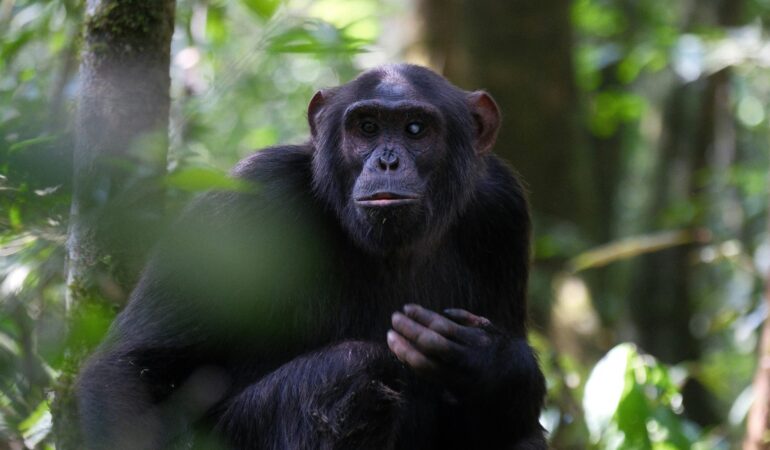
Chimpanzees are the most famous residents of Kibale National Park and the primary reason many travelers participate in the primate walk. Kibale hosts over 1,500 chimpanzees, one of the highest populations in Africa, making sightings relatively reliable compared to other forest destinations.
During a Kibale chimpanzee tracking experience, visitors may observe chimpanzees feeding, grooming, vocalizing, or moving through the canopy. Their social behavior is highly complex, reflecting intelligence and emotional depth similar to humans.
Early morning walks offer the best chance of encountering chimpanzees as they descend from nesting trees to begin their daily activities. Guides use vocalizations, nest locations, and movement patterns to track their position within the forest.
Seeing chimpanzees in their natural habitat is often described as one of the most powerful wildlife encounters in Uganda.
Other Primates You May See on the Walk
While chimpanzees are the highlight, Kibale National Park supports 13 primate species, making the Kibale National Park primate walk Uganda one of the most diverse primate experiences in Africa.
Red colobus monkeys are commonly seen in large groups moving through the canopy, often interacting with other species. Their striking black-and-red coloration makes them easy to identify even at a distance.
Black-and-white colobus monkeys are equally impressive, known for their long white tails and graceful leaps between trees. These monkeys are often seen in quieter forest sections where they feed on leaves and young shoots.
L’Hoest’s monkeys are more elusive and tend to stay close to the forest floor, while grey-cheeked mangabeys are frequently observed foraging in mixed groups with other primates.
Blue monkeys and olive baboons are also present, adding further diversity to the primate population and increasing the chances of multiple sightings during a single walk.
Forest Ecosystem and Habitat Diversity
Kibale National Park is a classic tropical rainforest characterized by dense canopy cover, thick undergrowth, and a humid climate that supports continuous plant growth throughout the year.
The forest structure includes towering mahogany and fig trees that form the upper canopy, while the understory is filled with shrubs, vines, and medicinal plants used by local communities.
This layered ecosystem creates ideal conditions for primates, which rely on both fruiting trees and safe canopy pathways for movement and feeding.
The diversity of habitats within the forest ensures that primate tracking in Kibale Uganda remains productive across different seasons.
Birdlife Along the Primate Walk
In addition to primates, Kibale National Park is a paradise for birdwatchers, with over 370 recorded bird species. The forest supports a wide range of Albertine Rift endemics and tropical forest specialists.
Species such as the African grey parrot, black bee-eater, yellow-rumped tinkerbird, and green-breasted pitta are among the highlights for bird enthusiasts.
The forest canopy and clearings provide excellent opportunities for observing mixed-species flocks moving through the trees, especially during early morning hours.
For many travelers, the combination of primates and birds makes Kibale Forest birding Uganda an unexpectedly rich experience alongside chimpanzee tracking.
Bigodi Wetland Sanctuary Extension
Many primate walks in Kibale are combined with a visit to Bigodi Wetland Sanctuary, a community-managed conservation area located near the park boundary. This wetland is one of Uganda’s most important biodiversity hotspots outside protected forests.
Bigodi supports additional primates such as red-tailed monkeys and vervet monkeys, along with a rich diversity of bird species including the great blue turaco and papyrus gonolek.
The wetland also provides cultural insight into local conservation efforts, where community tourism directly supports livelihoods and environmental protection.
For travelers extending their experience, Bigodi Wetland birding and primate walks add depth and variety to the Kibale safari itinerary.
Best Time for Kibale Primate Walks
Kibale National Park is open for primate walks throughout the year, but the dry seasons from June to September and December to February are generally preferred for easier forest trekking conditions.
During these periods, forest trails are less slippery, and visibility within the canopy is slightly improved due to reduced rainfall.
However, the wet seasons offer their own advantages, including increased fruit availability, which often leads to more active primate feeding behavior.
Chimpanzees and other primates remain active year-round, making Kibale a reliable destination for chimpanzee tracking Uganda safaris regardless of season.
What to Expect During the Primate Walk
A typical Kibale primate walk begins early in the morning with a briefing from Uganda Wildlife Authority rangers. Visitors are then guided into the forest along established trails while listening for primate calls and movement.
The pace of the walk depends on animal location and forest conditions. Once primates are located, visitors are allowed a limited observation time to minimize disturbance.
Encounters can vary from brief sightings in the canopy to extended observations of chimpanzee groups interacting on the forest floor.
The experience is unpredictable but highly rewarding, making every Kibale National Park safari Uganda unique.
Photography Tips in Kibale Forest
Photographing primates in a dense rainforest requires patience and proper equipment. Low light conditions under the canopy often require fast lenses and higher ISO settings.
Telephoto lenses are essential for capturing chimpanzees and monkeys without disturbing them. Stabilization is also important due to uneven terrain and limited lighting.
Natural behavior shots, such as grooming or feeding, provide the most compelling wildlife images.
Guides often assist photographers by positioning groups at optimal viewing angles without interfering with animal behavior.
Conservation and Research Importance
Kibale National Park is not only a tourism destination but also a major center for primate research and conservation. Long-term studies on chimpanzee behavior, ecology, and genetics have been conducted in the park for decades.
These studies contribute to global understanding of primate evolution and human-animal relationships. Conservation programs also focus on habitat protection, anti-poaching efforts, and community engagement.
Tourism plays a vital role in funding these initiatives, ensuring that Kibale chimpanzee conservation Uganda continues to benefit both wildlife and surrounding communities.
Cultural Encounters Around Kibale
The communities surrounding Kibale National Park offer cultural experiences that complement forest primate walks. Visitors can engage with local traditions, agricultural practices, and conservation education programs.
These interactions help travelers understand how local populations coexist with wildlife and contribute to conservation efforts through community tourism initiatives.
Cultural visits also provide economic benefits to local families, strengthening the relationship between tourism and conservation.
Who Should Experience Kibale Primate Walks
Kibale is ideal for travelers interested in wildlife behavior, forest ecosystems, photography, and primate conservation. It is particularly well-suited for those who want more than just game drives and are interested in immersive nature experiences.
Families, researchers, birdwatchers, and safari enthusiasts all find value in the diversity of experiences offered within the forest.
For many visitors, Kibale serves as a highlight of their Uganda itinerary, especially when combined with gorilla trekking in Bwindi or savannah safaris in Queen Elizabeth National Park.
Conclusion
The Kibale National Park primate walk Uganda experience offers one of the most immersive rainforest adventures in Africa. With its exceptional primate diversity, dense tropical forest, and rich birdlife, Kibale provides a unique opportunity to observe wildlife in one of its most natural and undisturbed environments.
From chimpanzee encounters to red colobus monkeys and vibrant bird species, every moment in the forest contributes to a deeper understanding of Uganda’s ecological richness.
For travelers seeking a meaningful and educational safari experience, Kibale stands as an essential destination within Uganda’s broader wildlife circuit.