July 27, 2026
African Fish Eagle Uganda: Iconic Bird of Ugandan Waters
The Symbol of Uganda’s Lakes, Rivers, and Wetlands
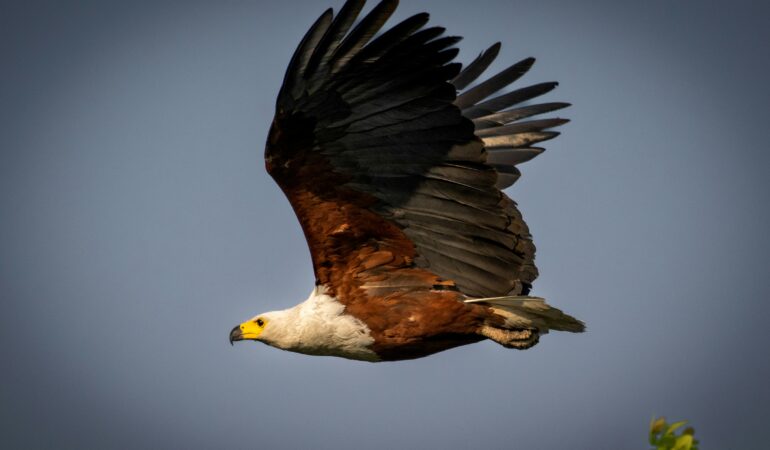
The African Fish Eagle Uganda is one of the most recognizable and majestic birds on the African continent. With its striking white head, chestnut body, and powerful call that echoes across lakes and rivers, this raptor is often regarded as the true voice of Africa’s waterways. In Uganda, it is especially iconic, frequently seen perched along the shores of Lake Victoria, the Nile River, Queen Elizabeth National Park, and countless wetlands that define the country’s rich aquatic ecosystems.
For travelers exploring Uganda on safari, the sight of an African Fish Eagle swooping low over water or calling from a tall acacia tree is unforgettable. It is not just a birdwatching highlight; it is a symbol of Uganda’s ecological richness and natural beauty.
At Monumental Gorilla Tours, we include birding experiences across Uganda’s top destinations, allowing travelers to combine wildlife safaris, gorilla trekking, and birdwatching into one seamless journey.
What Is the African Fish Eagle?
The African Fish Eagle (Haliaeetus vocifer) is a large bird of prey belonging to the eagle family. It is widely distributed across sub-Saharan Africa wherever large bodies of water are present. Uganda offers some of the best habitats for this species due to its abundance of lakes, rivers, swamps, and wetlands.
This eagle is most famous for its distinctive call, often described as the “voice of Africa.” Its loud, echoing cry is commonly heard at sunrise or sunset along water bodies, creating an atmosphere that defines the African wilderness experience.
Physically, the African Fish Eagle is striking. It has a white head and chest, a deep brown body, and black wings with powerful talons designed for catching fish. Its hooked beak and sharp eyesight make it a highly efficient hunter.
Why the African Fish Eagle Is So Important in Uganda
Uganda is often called the “Pearl of Africa,” and the presence of the African Fish Eagle Uganda reinforces this title. The bird plays a vital ecological role in aquatic ecosystems by controlling fish populations and maintaining balance within freshwater habitats.
Its presence is also an indicator of healthy water systems. African Fish Eagles thrive in unpolluted environments with abundant fish populations, meaning their presence along Uganda’s lakes and rivers reflects the country’s rich biodiversity.
Beyond ecology, the bird is deeply symbolic. It appears in tourism branding, wildlife photography, and safari imagery, representing freedom, strength, and the beauty of Africa’s natural landscapes.
Where to See African Fish Eagles in Uganda
One of the best things about birding in Uganda is that the African Fish Eagle can be seen in multiple locations across the country. Unlike some rare species, it is widely distributed and relatively easy to spot during safaris and boat cruises.
Lake Victoria
Lake Victoria, Africa’s largest freshwater lake, offers some of the most reliable sightings. Fish Eagles are commonly seen perched on fig trees, papyrus edges, and rocky outcrops along the shoreline. Their calls often echo across the water, especially during early morning boat rides.
Queen Elizabeth National Park
In Queen Elizabeth National Park, especially around the Kazinga Channel, African Fish Eagles are frequently observed hunting fish or resting on tall riverine trees. Boat cruises along the channel provide excellent photography opportunities.
Murchison Falls National Park
The mighty Nile River in Murchison Falls National Park is another prime location. Here, Fish Eagles patrol the riverbanks and can often be seen diving dramatically into the water to catch fish.
Lake Bunyonyi
The scenic Lake Bunyonyi, surrounded by terraced hills, is also home to several pairs of African Fish Eagles. Their calls echo beautifully across the calm waters, adding to the lake’s peaceful atmosphere.
Mabamba Swamp
While Mabamba is famous for the shoebill stork, it also supports a healthy population of Fish Eagles, making it an excellent birding destination near Entebbe.
Behavior and Hunting Style
The African Fish Eagle Uganda is a master hunter. It relies heavily on fish, which it captures with remarkable precision. From a high perch overlooking the water, it scans for movement beneath the surface using its sharp eyesight.
When it spots a fish near the surface, the eagle swoops down at high speed, extending its talons just before contact. Once it grabs its prey, it lifts off powerfully and returns to a perch to feed.
Interestingly, African Fish Eagles are known for kleptoparasitic behavior, meaning they sometimes steal fish from other birds such as herons or smaller raptors.
Despite their hunting prowess, they are also opportunistic feeders and may consume small reptiles, birds, or carrion when fish are scarce.
The Iconic Call of the African Fish Eagle
One of the most unforgettable aspects of the African Fish Eagle Uganda is its call. Loud, far-reaching, and deeply evocative, the sound is often associated with the essence of African wilderness.
The call typically consists of a series of high-pitched notes followed by a descending cackle. It is used for communication, territorial defense, and pair bonding.
In Uganda, hearing the Fish Eagle’s call over Lake Victoria at sunrise or over the Kazinga Channel at sunset is a moment that stays with travelers long after their safari ends.
Breeding and Nesting Behavior
African Fish Eagles are monogamous birds, often forming lifelong pairs. They build large nests made of sticks and vegetation, usually located in tall trees near water bodies.
These nests are reused and expanded year after year, sometimes growing to impressive sizes. The female typically lays one to three eggs, which are incubated for about 42 to 45 days.
Both parents participate in raising the chicks, although the female spends more time at the nest while the male provides food.
Young eagles fledge after about 70 to 75 days but may remain dependent on their parents for several more weeks.
Best Time for Birdwatching African Fish Eagles in Uganda
The African Fish Eagle Uganda can be observed throughout the year, making it a reliable species for birdwatchers visiting Uganda.
However, the best birding conditions are during the dry seasons from June to September and December to February. During these periods, water levels are stable, and wildlife viewing along lakes and rivers is generally easier.
The wet seasons also offer excellent opportunities, especially for photographers who enjoy lush green landscapes and dramatic skies.
African Fish Eagle and Uganda’s Birding Diversity
Uganda is one of Africa’s top birding destinations, with over 1,070 recorded bird species. The African Fish Eagle is just one highlight among many, but it is often the most easily recognized.
Birding in Uganda allows travelers to combine sightings of Fish Eagles with other iconic species such as the shoebill stork, grey crowned crane (Uganda’s national bird), kingfishers, hornbills, turacos, and sunbirds.
This diversity makes Uganda a paradise for both beginner and expert birdwatchers.
Combining Birdwatching with Safari Experiences
One of the advantages of exploring Uganda is the ability to combine birdwatching with other wildlife experiences. The African Fish Eagle Uganda is often seen during boat safaris in Queen Elizabeth National Park, game drives in Murchison Falls, and even while traveling between destinations.
Many travelers combine birding with:
- Gorilla trekking in Bwindi or Mgahinga
- Chimpanzee tracking in Kibale Forest
- Game drives in savannah parks
- Boat cruises on the Nile or Kazinga Channel
- Cultural experiences with local communities
This combination creates a well-rounded safari experience that appeals to both wildlife enthusiasts and birding specialists.
Conservation Status of the African Fish Eagle
The African Fish Eagle is currently listed as a species of Least Concern, meaning it is not globally endangered. However, local populations can be affected by habitat loss, pollution, and overfishing in certain regions.
In Uganda, conservation efforts within protected areas such as national parks and wetlands help maintain stable populations. The protection of lakes, rivers, and swamps is essential for ensuring the long-term survival of this iconic bird.
Tourism also plays a role in conservation by supporting protected areas and encouraging sustainable use of natural resources.
Photography Tips for African Fish Eagles
For photographers visiting Uganda, the African Fish Eagle Uganda is one of the most rewarding subjects.
Early morning and late afternoon provide the best lighting conditions, especially around lakes and rivers. Using a telephoto lens allows for detailed shots of hunting behavior, perched individuals, and flight sequences.
Boat safaris offer excellent low-angle perspectives, particularly along the Kazinga Channel and Nile River.
Capturing the moment when an eagle dives for fish is one of the most sought-after wildlife photography experiences in Africa.
Cultural Significance in Uganda
While not deeply embedded in traditional mythology, the African Fish Eagle holds symbolic importance in modern Uganda. It represents strength, freedom, and the natural heritage of the country.
Its presence in tourism marketing and conservation messaging reinforces Uganda’s identity as a premier wildlife destination.
For many visitors, the eagle becomes a lasting symbol of their safari experience, just like mountain gorillas or elephants.
Explore Uganda’s Birdlife with Monumental Gorilla Tours
The African Fish Eagle Uganda is more than just a bird; it is a living symbol of Uganda’s lakes, rivers, and wetlands. Whether seen gliding over the Nile, calling across Lake Victoria, or perched in Queen Elizabeth National Park, it offers travelers a powerful connection to Africa’s wild landscapes.
At Monumental Gorilla Tours, we design customized Uganda safari experiences that include birdwatching, gorilla trekking, chimpanzee tracking, and classic wildlife safaris. Our expert guides ensure travelers not only see Uganda’s iconic species but also understand their ecological and cultural importance.
Visit Monumental Gorilla Tours to explore our safari packages and begin planning your journey into Uganda’s rich birdlife and unforgettable wildlife experiences.