July 29, 2026
Serengeti Great Migration: Best Time and How to Combine With Uganda
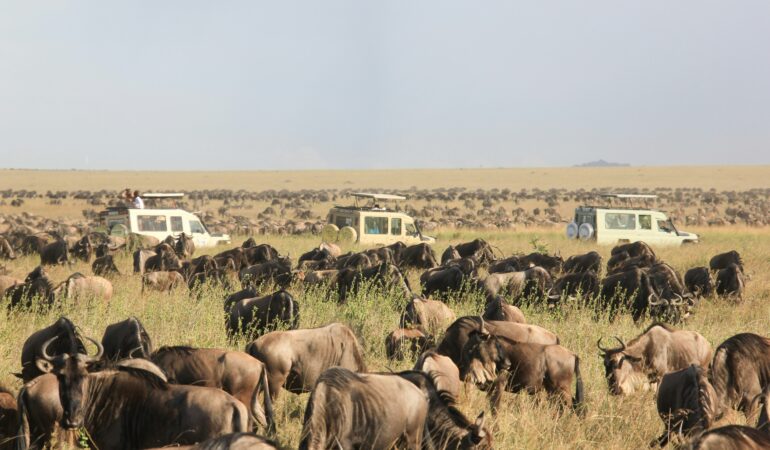
The Serengeti Great Migration is widely regarded as the greatest wildlife spectacle on Earth. Every year, more than 1.5 million wildebeest, accompanied by hundreds of thousands of zebras and gazelles, travel across the Serengeti-Mara ecosystem in search of fresh grazing. This extraordinary movement attracts travelers from around the world who dream of witnessing dramatic river crossings, predator-prey interactions, and endless herds stretching across the African plains.
While the Great Migration is an unforgettable experience on its own, many travelers are now choosing to combine it with gorilla trekking in Uganda. This creates the ultimate East African safari, bringing together two of Africa’s most iconic wildlife encounters in a single journey. On one trip, you can watch vast herds move across Tanzania’s Serengeti National Park before hiking through the ancient rainforests of Bwindi Impenetrable National Park to spend an hour with endangered mountain gorillas.
At Monumental Gorilla Tours, we specialize in tailor-made multi-country safaris that combine the best of Tanzania and Uganda. This guide explains the best time to experience the Serengeti Great Migration, how the migration changes throughout the year, and how to seamlessly combine it with an unforgettable Uganda safari.
Why the Serengeti Great Migration Is One of Africa’s Greatest Wildlife Experiences
The Great Migration is not a single event but a continuous annual cycle driven by rainfall and the search for fresh grass. Unlike seasonal migrations in other parts of the world, the Serengeti migration never truly stops. The herds move throughout the year, following a natural pattern across Tanzania’s Serengeti National Park and Kenya’s Maasai Mara National Reserve.
During this journey, wildebeest face enormous challenges, including crocodile-filled rivers, hungry lions, cheetahs, hyenas, leopards, and changing weather conditions. Every stage of the migration offers a different wildlife experience, making the Serengeti a year-round safari destination.
For photographers, wildlife enthusiasts, and first-time safari travelers, the migration represents one of the most remarkable natural events on the planet.
Understanding the Great Migration Cycle
One of the biggest misconceptions is that the migration only happens during river crossings. In reality, the migration is a twelve-month movement that changes location depending on rainfall.
From January to March, the herds gather in the southern Serengeti around the Ndutu region, where calving season takes place. During this period, hundreds of thousands of wildebeest give birth within a few weeks, creating exceptional opportunities to witness newborn animals and increased predator activity.
Between April and May, the herds begin moving northwest through the central Serengeti. This period often coincides with the long rains, producing lush green landscapes and fewer tourists.
From June to July, the migration reaches the western corridor, where dramatic crossings of the Grumeti River begin.
Between July and October, many herds continue north toward the Mara River, where the famous river crossings occur. These crossings are among the most photographed wildlife events in Africa as crocodiles wait beneath the water while wildebeest attempt dangerous crossings.
By November and December, seasonal rains encourage the herds to move back toward the southern Serengeti, completing the annual cycle.
Understanding this movement helps travelers choose the best travel dates depending on the specific migration experience they hope to see.
Best Time to Visit the Serengeti Great Migration
The best time for the Serengeti Great Migration depends entirely on what you want to experience.
Travelers interested in witnessing thousands of newborn wildebeest should visit between January and March during calving season. This period offers outstanding predator sightings because lions, cheetahs, and hyenas closely follow the vulnerable young animals.
Visitors hoping to witness dramatic river crossings should plan their safari between July and September, although exact timing varies each year depending on rainfall patterns.
Those seeking quieter safaris with fewer vehicles often prefer April, May, or November, when landscapes are green and visitor numbers are lower.
Because the migration is influenced by weather rather than fixed dates, experienced safari planning is essential to maximize your chances of being in the right place at the right time.
Why Combine the Serengeti With Uganda?
Combining the Serengeti Great Migration with gorilla trekking in Uganda creates one of Africa’s most diverse wildlife adventures.
The Serengeti offers vast open plains filled with large mammals, dramatic predator interactions, and classic game drives. Uganda provides an entirely different experience, taking visitors deep into tropical rainforests to encounter endangered mountain gorillas at close range.
These two destinations complement each other perfectly because they showcase completely different ecosystems, landscapes, and wildlife experiences.
Instead of choosing between a traditional safari and gorilla trekking, travelers can enjoy both during one unforgettable East African journey.
The Perfect Safari Combination
A combined Tanzania and Uganda itinerary offers remarkable wildlife diversity within a relatively short period.
Your journey may begin with several days exploring Serengeti National Park, followed by visits to the Ngorongoro Conservation Area and Tarangire National Park before flying to Uganda for gorilla trekking.
In Uganda, travelers often continue beyond Bwindi Impenetrable National Park to include chimpanzee tracking in Kibale Forest National Park, game drives in Queen Elizabeth National Park, or a boat safari along the Kazinga Channel.
This combination creates one of the richest wildlife itineraries available anywhere in Africa.
Gorilla Trekking Complements the Migration Perfectly
Although the Great Migration is famous for its enormous scale, gorilla trekking in Uganda offers the exact opposite experience.
Instead of observing thousands of animals across open plains, visitors quietly approach a single habituated mountain gorilla family deep within the rainforest.
The emotional impact of standing just a few meters from a silverback gorilla creates an intimate wildlife encounter unlike any traditional safari.
Many travelers describe the combination of the Serengeti and Bwindi as offering both Africa’s greatest wildlife spectacle and its most personal wildlife experience.
Best Time to Combine Serengeti and Uganda
Fortunately, gorilla trekking in Uganda is available throughout the year, making it easy to combine with any stage of the Great Migration.
If your priority is witnessing the Mara River crossings between July and September, this period also coincides with Uganda’s relatively dry season, making gorilla trekking conditions excellent.
Traveling between January and March allows visitors to experience Serengeti calving season while also enjoying favorable trekking conditions in Bwindi.
Even during Uganda’s rainy seasons, gorilla trekking continues daily, allowing flexible itinerary planning regardless of migration timing.
Suggested Multi-Country Safari Itinerary
A typical combined itinerary begins with arrival in Arusha before traveling to Tarangire National Park and the Ngorongoro Conservation Area.
Several days are then spent exploring the Serengeti during the migration before flying to Entebbe in Uganda.
After arriving in Uganda, travelers continue to Bwindi Impenetrable National Park for gorilla trekking before extending the safari to Queen Elizabeth National Park or Kibale Forest National Park.
Depending on available time, Lake Bunyonyi provides a relaxing conclusion before departure.
This itinerary offers outstanding wildlife diversity while minimizing unnecessary travel time.
Travel Logistics Between Tanzania and Uganda
Modern regional flights make combining Tanzania safaris with Uganda gorilla trekking relatively straightforward.
Most travelers fly from the Serengeti or Kilimanjaro area to Entebbe via regional connections, avoiding long overland travel.
From Entebbe, domestic flights or comfortable road transfers connect visitors to Bwindi Impenetrable National Park.
Working with an experienced safari operator ensures smooth coordination of flights, permits, accommodation, and transportation across both countries.
Accommodation Options
A combined safari allows travelers to experience some of East Africa’s finest safari accommodations.
In the Serengeti, luxury tented camps place guests close to the migration while providing exceptional comfort and wildlife viewing.
In Uganda, eco-lodges overlooking Bwindi Impenetrable National Park offer spectacular forest views, personalized service, and convenient access to gorilla trekking sectors.
Choosing accommodations near your trekking headquarters reduces early morning travel and improves the overall safari experience.
Conservation Benefits of a Combined Safari
Both the Serengeti Great Migration and Uganda’s mountain gorillas are protected through carefully managed conservation tourism.
Park entrance fees and gorilla trekking permits directly support wildlife protection, anti-poaching efforts, scientific research, ranger employment, and community development.
By visiting both destinations responsibly, travelers contribute to the long-term conservation of two of Africa’s most iconic ecosystems.
Sustainable tourism remains one of the most effective tools for protecting endangered wildlife while supporting local communities.
Photography Opportunities
Few safari combinations offer greater photographic diversity than the Serengeti and Uganda.
The Serengeti provides sweeping landscapes, dramatic sunsets, predator action, and massive herds moving across golden plains.
In contrast, Bwindi gorilla trekking offers intimate portraits of mountain gorillas surrounded by lush rainforest vegetation.
Together, these destinations create an extraordinary portfolio of African wildlife photography covering two completely different habitats.
Why Book a Combined Safari Early?
Both Serengeti migration camps and Uganda gorilla trekking permits have limited availability, especially during peak travel months.
Gorilla permits are issued for specific dates and trekking sectors, while popular migration camps often sell out many months in advance.
Booking early provides greater flexibility in itinerary design, accommodation choice, and flight availability.
Planning well ahead also increases the likelihood of securing your preferred travel dates during the migration season.
Experience the Best of East Africa with Monumental Gorilla Tours
At Monumental Gorilla Tours, we specialize in creating seamless multi-country safaris that combine the breathtaking Serengeti Great Migration with unforgettable gorilla trekking in Uganda.
Our experienced safari consultants coordinate every aspect of your journey, including international flights, regional connections, gorilla permits, safari accommodations, professional guides, park fees, and personalized itineraries.
Whether your dream is witnessing the Mara River crossings, photographing the Serengeti calving season, or coming face-to-face with a mountain gorilla in Bwindi Impenetrable National Park, we design every safari around your interests, schedule, and budget.