August 11, 2026
Kazinga Channel Boat Cruise: What to Expect
Few wildlife experiences in Uganda deliver as much concentrated animal viewing with as little physical effort as a Kazinga Channel boat cruise. Gliding slowly along the natural, 32-kilometer waterway that connects Lake George and Lake Edward within Queen Elizabeth National Park, visitors pass some of the highest concentrations of hippopotamus found anywhere on the continent, alongside Nile crocodiles, elephants, buffalo, and an extraordinary variety of waterbirds, all viewable from the comfort of a launch boat without a single step of walking required. This guide covers everything a first-time visitor should know, from what wildlife to expect and the best time of day to cruise, to boat options, practical logistics, and how the cruise fits into a wider Queen Elizabeth itinerary.
Why the Kazinga Channel Is Such a Wildlife Magnet
The channel’s ecological importance comes down to a simple combination of water and salt. As one of the few permanent water sources in this part of the park, the Kazinga Channel draws enormous numbers of animals during the drier months, when surrounding grasslands offer little in the way of standing water. Its banks are also lined with natural salt licks, which attract elephants and buffalo in particular, often gathering in visible herds along the shoreline as the boat passes.
This concentration of resources has made the channel home to one of the largest hippo populations in Africa, with estimates regularly placing more than 1,500 individuals along its length, visible in tightly packed pods that surface, yawn, and occasionally spar within easy view of passing boats. Nile crocodiles bask along the muddy banks in equally impressive numbers, often stretched out motionless in the sun in a way that makes them easy to spot and photograph from the water.
What Wildlife You Can Expect to See
A typical Kazinga Channel cruise delivers a remarkably reliable set of sightings, which is part of why it has become one of the most consistently recommended activities in Queen Elizabeth National Park, even for travelers who have already been on several game drives elsewhere in Uganda.
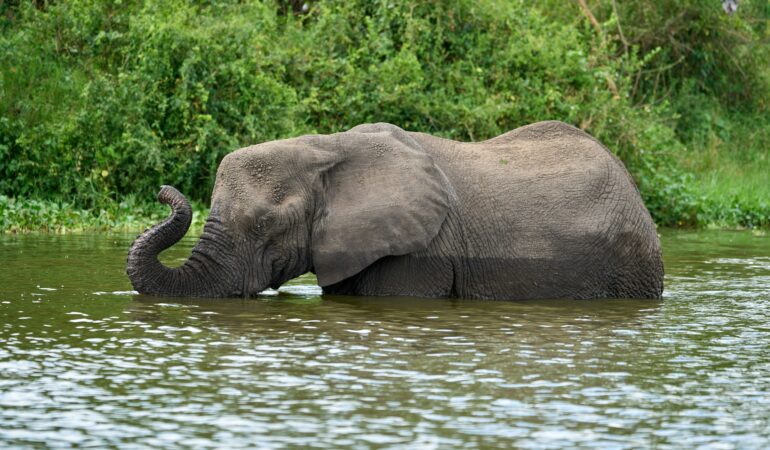
Hippos dominate the experience almost from the moment the boat leaves the dock, visible in pods scattered along both banks and frequently surfacing close enough to the boat for excellent photography. Elephants are a near-daily sighting as well, often gathering at the water’s edge to drink or wallow, sometimes in family groups that include young calves sticking close to their mothers. Buffalo herds, occasionally numbering in the hundreds, graze along the grassy banks, while smaller antelope species such as waterbuck pick their way along the shoreline with more caution.
Birdlife on the channel is exceptional, drawing dedicated birding groups on its own merit. The African fish eagle is a near-constant presence, perched in trees along the banks or circling overhead, its distinctive call carrying across the water throughout the cruise. Pied kingfishers, malachite kingfishers, African skimmers, and the striking saddle-billed stork all appear regularly, along with pelicans and cormorants that gather in large numbers at particular bends in the channel. Serious birders visiting during the right season sometimes spot the shoebill stork here as well, one of Africa’s most sought-after and unusual-looking bird species, though sightings are less predictable than the channel’s more common residents.
Beyond the wildlife immediately visible from the water, the cruise also offers a rare vantage point on local fishing communities along the channel, with traditional dugout canoes and small fishing villages providing a glimpse into life alongside the park that most safari activities don’t include.
Choosing the Right Time of Day
Timing significantly affects both the wildlife visible and the overall comfort of a Kazinga Channel boat cruise, and most lodges and operators offer both morning and afternoon departure options.
Morning cruises, typically departing between 9:00 and 10:00 a.m., tend to catch animals still active after the cooler overnight hours, with elephants and buffalo often still gathered at the water’s edge before retreating into shade as temperatures rise. Light in the morning is generally softer and better suited to photography, with fewer heat-shimmer distortions across the water.
Afternoon cruises, usually departing between 2:00 and 4:00 p.m., coincide with the day’s peak heat, which paradoxically works in visitors’ favor when it comes to hippo viewing, since hippos spend the hottest hours submerged and are often more visible and active as temperatures begin to cool later in the cruise. Afternoon departures also tend to end closer to sunset, and many operators time the return leg to catch the channel bathed in golden evening light, a popular choice among photographers despite the added heat during the outbound journey.
Neither time slot is objectively better, and the decision often comes down to whether a traveler prioritizes photography light, animal activity levels, or simply what fits their broader day’s schedule around a morning or afternoon game drive elsewhere in the park.
How Long the Cruise Takes and What to Expect on Board
Most standard Kazinga Channel cruises last approximately two hours, departing from the jetty near Mweya Peninsula, the park’s main tourism hub, though some operators offer shorter one-hour options or extended three-hour cruises for travelers wanting more time on the water, particularly serious birders.
Boats vary from larger double-decker launches accommodating forty or more passengers, typically used by the Uganda Wildlife Authority’s standard scheduled cruises, to smaller, more intimate vessels operated privately by individual lodges, carrying perhaps twelve to twenty guests. Private lodge cruises generally offer a quieter, more personalized experience, with knowledgeable guides able to slow down or reposition the boat for a particularly good sighting in a way that’s harder to arrange on a larger, scheduled public launch.
Onboard, an experienced guide narrates the journey, pointing out wildlife, explaining the ecological significance of the channel, and answering questions throughout. Most boats offer covered upper decks for shade alongside open lower-deck seating for unobstructed photography, and refreshments, sometimes including a light snack or drinks depending on the operator, are commonly included on the more upscale private cruises.
Practical Tips for the Cruise
A few simple preparations make the experience considerably more enjoyable. Sun protection matters enormously on the water, where reflected glare intensifies UV exposure even on overcast days, so a hat, sunglasses, and reef-safe sunscreen are all worth packing. A light jacket or windbreaker is useful too, particularly on the water where breezes can feel cooler than the surrounding land, especially during early morning departures.
Binoculars significantly enhance the birding side of the experience, allowing closer views of species perched further from the boat’s route, and a zoom lens is similarly valuable for photographers wanting detailed shots of distant elephants or basking crocodiles without needing the boat to approach too closely, which most operators avoid doing out of respect for the animals’ space.
Booking ahead is generally advisable during peak season, June through September and December through February, when demand for cruise slots rises alongside overall park visitor numbers, though the Kazinga Channel’s scheduled public cruises typically run multiple times daily, making last-minute bookings more feasible here than for some of Uganda’s more permit-restricted activities like gorilla or chimpanzee trekking.
Combining the Cruise with the Rest of Queen Elizabeth National Park
The Kazinga Channel cruise works best as part of a fuller Queen Elizabeth National Park itinerary rather than a standalone activity, and most travelers pair it with game drives across the park’s Kasenyi Plains or Ishasha sector, along with a visit to the crater lakes region near Mweya. Queen Elizabeth is well known for its tree-climbing lions in the Ishasha sector, a rare behavior seen in few other African parks, and combining a morning game drive there with an afternoon Kazinga Channel cruise makes for an exceptionally well-rounded day of wildlife viewing.
Given the park’s central location within Uganda’s western safari circuit, many of our guests combine Queen Elizabeth and its Kazinga Channel cruise with chimpanzee trekking in nearby Kibale Forest before continuing south toward Bwindi Impenetrable Forest for gorilla trekking, a natural progression covered in more detail in our guide to chimpanzee trekking in Kibale Forest. This kind of layered itinerary, primates in Kibale, big game and the boat cruise in Queen Elizabeth, and gorillas in Bwindi, has become one of the most popular ways to experience the full breadth of Uganda’s wildlife within a single, well-structured trip.
Where to Stay Near the Kazinga Channel
Accommodation options cluster primarily around the Mweya Peninsula, offering easy access to the boat jetty alongside game drive routes across the park’s northern sector. Properties here range from comfortable mid-range lodges to more upscale options with views directly over the channel itself, where it’s entirely possible to watch elephants and hippos from a private veranda before even boarding the boat.
Staying close to Mweya also simplifies logistics considerably, since it allows for an early morning game drive followed by a midday return to the lodge, and an afternoon cruise departing directly from the nearby jetty, all without significant additional driving between activities.
Best Time of Year for a Kazinga Channel Cruise
While the cruise operates year-round, seasonal patterns do influence the experience. The dry seasons, June through September and December through February, tend to concentrate wildlife more tightly along the channel’s banks, since surrounding water sources dry up and animals rely more heavily on the permanent water here, often producing the most dramatic and reliable sightings of the year.
The wetter months, March through May and October through November, spread wildlife more widely across the park’s grasslands, meaning channel sightings can be slightly less concentrated, though birdlife often remains excellent, and the surrounding landscape takes on a lush, vivid green that many photographers find particularly appealing.
Planning Your Queen Elizabeth Trip with Monumental Gorilla Tours
A Kazinga Channel boat cruise ranks among the most rewarding and effortless wildlife experiences available anywhere in Uganda, delivering close encounters with hippos, elephants, crocodiles, and an outstanding variety of birdlife, all without leaving the comfort of a boat deck. Combined with game drives across Queen Elizabeth National Park’s plains and the tree-climbing lions of Ishasha, it forms the backbone of one of Uganda’s most complete wildlife circuits.
Our team at Monumental Gorilla Tours builds Queen Elizabeth National Park into itineraries connecting chimpanzee trekking in Kibale Forest with gorilla trekking further south in Bwindi, creating a single, seamlessly organized safari across the best of western Uganda’s wildlife. If you’re planning a broader itinerary, take a look at our guide to chimpanzee trekking in Kibale Forest to see how the two destinations connect. When you’re ready to plan your trip, reach out to our safari specialists for a tailored itinerary that includes the Kazinga Channel cruise alongside the game drives, primate trekking, and lodges that suit your travel dates and budget.
However your itinerary comes together, a slow drift along the Kazinga Channel, surrounded by hippos, elephants at the waterline, and fish eagles calling overhead, remains one of the most quietly spectacular ways to experience Uganda’s wildlife.