July 20, 2026
Driving in Uganda: Road Conditions and Self-Drive Tips
Getting behind the wheel and exploring Uganda independently is one of the most rewarding ways to experience the country, offering a level of freedom and flexibility that a fixed group itinerary simply cannot match. Driving in Uganda is entirely legal and increasingly popular among confident, well-prepared travelers, but it comes with a genuinely different set of demands than driving in Europe, North America or Australia, from left-hand traffic and variable road surfaces to the paperwork required before you ever pick up the keys. This guide walks through everything a traveler needs to know before committing to a self-drive Uganda trip, covering legal requirements, real road conditions across the country’s major routes, vehicle selection, safety practices, and the honest tradeoffs between self-driving and hiring a guide.
Is Self-Drive Right for Your Uganda Trip
Before diving into the practical details, it is worth being honest about who self-drive travel actually suits. A self-drive safari Uganda trip works best for travelers with genuine off-road or 4×4 driving experience, a reasonable tolerance for unpredictable road conditions, and enough flexibility in their schedule to absorb the occasional delay from a rough stretch of road, a police checkpoint, or an unexpected obstacle like livestock crossing the highway. Travelers whose priority is maximizing wildlife sightings, minimizing stress, and moving efficiently between parks on a tight schedule are often better served by a guided safari with a professional driver-guide, since navigating unfamiliar terrain while also trying to spot game or identify birds divides attention in ways that can detract from both driving safety and the wildlife experience itself. Self-drive is not inherently more dangerous when done properly, but it does shift a significant amount of responsibility onto the traveler, and understanding this tradeoff honestly before booking a rental vehicle saves considerable frustration later in the trip.
Legal Requirements for Foreign Drivers
Uganda is a signatory to the 1949 Geneva Convention on Road Traffic, which means the country legally recognizes International Driving Permits alongside a traveler’s home country license, and this combination is what makes driving in Uganda legally possible for most foreign visitors. Foreign drivers must carry both their valid home country license and a valid International Driving Permit, or IDP, together at all times, since Uganda law requires both documents to be presented if requested, and having only one is generally treated as insufficient even if the home license happens to be printed in English. The IDP must be obtained before arrival, since it cannot be issued locally, and it remains valid for up to a year from its issue date, though most travelers only need it for the duration of a single trip. Traffic police checkpoints are common on both highways and routes leading into national parks, and officers do stop foreign-plated and rental vehicles regularly, so keeping both documents easily accessible rather than buried in luggage is a simple habit that avoids unnecessary delays. Our [Uganda visa and entry requirements guide] covers this alongside the other documentation travelers need to have in order before departure, including passport validity and visa applications, so that the paperwork side of the trip is fully sorted before landing at Entebbe.
Understanding Uganda’s Road Network
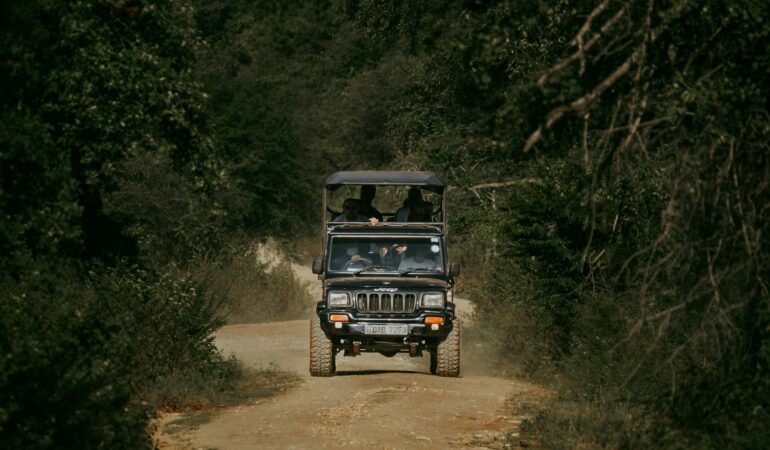
Uganda road conditions vary considerably depending on where you are driving, and understanding this variation is central to planning a realistic self-drive itinerary. The major highways connecting Kampala, Entebbe, and larger regional towns such as Mbarara, Fort Portal and Gulu are generally in good, well-maintained condition, sealed with tarmac and reasonably well signposted, making the core intercity network manageable even for drivers without extensive African driving experience. The picture changes considerably once you leave these main arteries and head toward national parks and more remote destinations, where gravel, laterite and dirt roads become the norm rather than the exception. Routes into Murchison Falls National Park, Queen Elizabeth National Park and particularly Bwindi Impenetrable National Park involve significant stretches of unpaved road, and the terrain around Bwindi specifically features steep gradients, sharp switchback turns and narrow sections that demand a confident, experienced driver even in good weather. Roads to Bwindi are manageable for capable self-drive travelers, with the Buhoma sector generally offering the most accessible approach compared to the steeper routes into Rushaga or Nkuringo, but this is genuinely not the terrain for a first-time international driver testing out unfamiliar 4×4 handling for the first time.
Seasonal rainfall dramatically affects road conditions across the entire unpaved network, and this is one of the most important planning factors for any self-drive trip. During the wetter months, roughly April through May and again in October through November, dirt and laterite roads can become significantly more difficult to navigate, with sections turning muddy, rutted or occasionally impassable without genuine 4×4 capability and driving experience. Travelers planning a self-drive trip during these shoulder season months should build extra time into their itinerary for slower travel and should confirm current road conditions with a local operator before committing to a specific route, since conditions can shift meaningfully within days of heavy rainfall. Our [Uganda national parks and best time to visit guide] breaks down seasonal patterns in more depth, which is useful reading for anyone weighing self-drive timing against weather risk.
Choosing the Right Vehicle
Vehicle selection is arguably the single most important decision in planning a self-drive safari Uganda trip, and this is not an area where cutting costs with a compact sedan makes sense once your route leaves the main highway network. Sedans and small hatchbacks can handle city driving comfortably in Kampala and Entebbe, but they are simply not built for the unpaved, rutted, and occasionally steep terrain that connects Uganda’s national parks, and attempting to reach a park like Bwindi or Kidepo Valley in a low-clearance vehicle risks both getting stuck and causing genuine damage to a rental car not designed for the conditions. A proper 4×4 vehicle with high ground clearance is not a luxury for any serious self-drive itinerary involving national parks, and the Toyota Land Cruiser remains the gold standard across the region for good reason, offering the ground clearance, robust four-wheel drive system and proven reliability that Uganda’s toughest routes genuinely demand. Reputable rental companies will steer serious safari travelers toward this category of vehicle by default, and it is worth resisting the temptation to save money on a smaller vehicle if the itinerary includes any of Uganda’s more remote or rugged park access roads.
Beyond the vehicle itself, practical extras matter considerably once you are away from major towns. A reliable spare tire, a functioning jack, a basic toolkit, and a spare fuel canister are all worth confirming with the rental company before departure, since fuel stations become sparser the further you travel from Kampala, Entebbe and the larger regional towns. GPS navigation, whether through a dedicated device or a reliable offline mapping app downloaded before losing signal, is essential given that road signage becomes inconsistent in more remote areas, and cell coverage inside and around several national parks is patchy at best. Renting from an established operator with genuine safari vehicle experience, rather than a general city car rental company, generally ensures the vehicle has already been properly prepared for the specific demands of park roads.
Traffic Laws and Speed Limits
Uganda drives on the left-hand side of the road, consistent with the United Kingdom, Kenya and several other countries, which is worth internalizing before departure for travelers accustomed to right-hand traffic, since the adjustment period matters most in the first hours of driving before it becomes second nature. Speed limits vary by location and are actively enforced, with roughly 50 kilometers per hour in towns and urban areas, 80 kilometers per hour on rural roads and highways, and considerably lower limits of 30 to 40 kilometers per hour inside national parks, where the reduced speed exists specifically to protect wildlife that may cross the road unexpectedly. Traffic police enforce these limits through both radar guns on highways and speed cameras in urban areas, and fines for violations typically run in the range of 15 to 60 US dollars depending on the severity of the infraction, payable on the spot in most cases. Seat belts are mandatory for all occupants, mobile phone use while driving is prohibited unless done through a hands-free system, and Uganda maintains a strict zero-tolerance policy toward drink-driving with genuinely severe penalties, none of which should come as a surprise to travelers accustomed to similar rules at home, but all of which are worth confirming given how differently enforcement can feel in an unfamiliar country.
Common Road Hazards to Watch For
Uganda traffic laws exist for good reason, and understanding the specific hazards that make Ugandan roads genuinely different from what many international travelers are used to helps drivers stay alert to the right things at the right moments. Boda-boda motorcycles are an enormous and constant presence on Uganda’s roads, particularly in and around Kampala, and they weave through traffic with a level of unpredictability that demands constant defensive awareness from any driver unfamiliar with the pattern. Pedestrians, cyclists, and livestock frequently share the road in rural areas and smaller towns, often with minimal warning, and this risk increases considerably in the early morning and evening hours when visibility drops. Poor road lighting outside major towns makes night driving genuinely more hazardous than daytime travel, since unlit vehicles, pedestrians and animals become far harder to spot in time to react safely, and this is one of the clearest pieces of advice experienced Uganda drivers consistently offer: avoid driving after dark whenever possible, and build itineraries that ensure arrival at each destination well before sunset. Inside national parks, wildlife on or near the road is an expected and constant hazard rather than an occasional surprise, and maintaining the reduced in-park speed limits is not merely a legal requirement but a genuine safety practice for both drivers and animals.
Fuel, Rest Stops and Route Planning
Planning fuel stops carefully is a detail that catches out travelers who assume East African infrastructure mirrors what they are used to at home. Fuel stations are reliably available along the main highways and in larger towns, but they become considerably sparser once a route heads into more remote park access roads, and running low on fuel in an area without cell coverage is a genuinely avoidable problem with basic planning. Filling up whenever the tank drops below half, rather than waiting until it is nearly empty, is standard practice among experienced Uganda drivers, and carrying a spare fuel canister for longer, more remote legs of a self-drive itinerary adds a reasonable safety margin. Building realistic travel time estimates into route planning matters just as much as fuel, since unpaved roads and mountainous terrain mean that distances that look short on a map frequently take considerably longer than the equivalent distance would on a paved highway elsewhere, and underestimating this is one of the most common mistakes first-time self-drive travelers make in Uganda.
Self-Drive Versus a Driver-Guide: Weighing the Options
For travelers who are drawn to the independence of self-drive but uncertain about tackling Uganda’s more demanding routes alone, hiring a local driver-guide alongside a rented vehicle offers a genuine middle ground worth considering seriously. A driver-guide brings local knowledge of current road conditions, alternate routes around any recent washouts or construction, and the kind of wildlife spotting expertise that meaningfully improves game drives, all while allowing travelers to relax and actually look at the scenery rather than focusing entirely on navigating unfamiliar terrain. This option costs more than a pure self-drive rental, typically an additional daily fee for the driver-guide’s services, but it removes a substantial amount of the risk and stress associated with Uganda’s more challenging routes, particularly the steep approach roads into Bwindi’s more remote trekking sectors. Many travelers who initially plan a full self-drive trip ultimately choose this hybrid approach once they understand the reality of park access roads, and it remains one of the most popular ways for confident but not expert drivers to enjoy genuine flexibility without taking on unnecessary risk. Our [Uganda self-drive versus guided safari comparison] goes into more depth on exactly this decision, helping travelers weigh cost, comfort and confidence level before committing to either approach.
Practical Tips for a Smooth Self-Drive Trip
A handful of practical habits make the difference between a smooth self-drive safari Uganda trip and one full of avoidable stress. Downloading offline maps before departure, since cell coverage in and around national parks is unreliable, ensures navigation remains functional even without signal. Carrying printed or digital copies of all required documentation, including the IDP, home license, passport, visa approval and rental agreement, keeps checkpoint stops brief and straightforward. Building generous time buffers into daily driving plans, rather than assuming highway-speed averages across the entire route, accounts realistically for unpaved sections, checkpoint stops, and the general unpredictability of rural East African travel. Confirming current road conditions with the rental company or a local operator immediately before departure, particularly during the wetter shoulder season months, helps avoid arriving at a washed-out or genuinely impassable section without warning. Finally, purchasing comprehensive rental insurance that specifically covers off-road and national park driving, rather than a basic policy designed for city use, protects against the higher likelihood of vehicle wear or minor damage that comes with genuinely rugged terrain.
Planning Your Uganda Road Trip With Local Expertise
Self-drive travel in Uganda offers a genuinely rewarding sense of independence, but the country’s mix of excellent highways and genuinely demanding park access roads means preparation matters more here than in many other self-drive destinations. Whether you decide on a full self-drive itinerary, a hybrid approach with a hired driver-guide, or a fully guided safari with professional drivers handling every mile, our team at Monumental Expeditions and Safaris can help match the right option to your comfort level, driving experience, and itinerary. Reach out to our team for honest advice on which approach suits your Uganda trip best, or browse our [guided Uganda safari packages] to see fully driven itineraries that take the road conditions and navigation entirely off your plate while you focus on the gorillas, wildlife and landscapes that brought you to Uganda in the first place.