August 11, 2026
Mgahinga vs Bwindi: Which Is Better for Gorilla Trekking?
Uganda offers travelers two distinct places to trek mountain gorillas, and the question of Mgahinga vs Bwindi gorilla trekking comes up in almost every planning conversation we have with guests. Both parks sit in the country’s far southwest, both are home to habituated gorilla families, and both require the same standard trekking permit. Yet the experience of visiting each is genuinely different, shaped by geography, gorilla family dynamics, park size, and even the volcanic landscape itself. This guide breaks down exactly how the two parks compare, so you can decide which one suits your travel style, fitness level, and broader Uganda itinerary.
A Quick Introduction to Both Parks
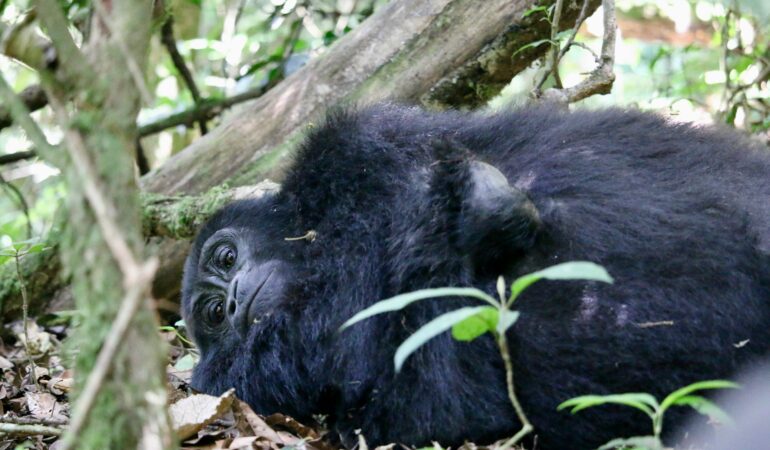
Bwindi Impenetrable Forest is Uganda’s flagship gorilla destination, a vast, ancient rainforest covering roughly 321 square kilometers and home to more than 450 mountain gorillas, close to half the world’s remaining population. It is divided into four trekking sectors, Buhoma, Ruhija, Rushaga, and Nkuringo, each with its own habituated families and its own network of lodges.
Mgahinga Gorilla National Park is considerably smaller, just 33.7 square kilometers, and forms part of the Virunga Conservation Area that stretches across Uganda, Rwanda, and the Democratic Republic of Congo. Rather than dense lowland-to-mid-altitude rainforest, Mgahinga is defined by three extinct volcanoes, Muhabura, Gahinga, and Sabinyo, which give the park a completely different visual character, more alpine and dramatic than Bwindi’s tangled, mist-covered canopy.
Historically, Mgahinga has hosted only a single habituated gorilla family, the Nyakagezi group, though that family is known for roaming across the border into Rwanda and Congo from time to time, which occasionally affects trekking availability. Bwindi, by contrast, now has more than twenty habituated families spread across its four sectors, giving it far greater trekking capacity and flexibility.
Comparing the Trekking Experience Itself
The terrain is where these two parks diverge most sharply. Bwindi’s name is not an exaggeration, “impenetrable” describes a forest of dense undergrowth, steep ridges, and slippery valley floors that can turn what looks like a two-hour hike on paper into a five- or six-hour trek in practice. Trails are often narrow, muddy, and require guides to cut fresh paths through vegetation with machetes.
Mgahinga’s volcanic slopes present a different kind of challenge. Trails climb steadily up the lower flanks of the Virunga volcanoes, through bamboo forest and increasingly open vegetation. The going can be steep, particularly given the park’s higher base elevation, but the terrain tends to be more open and less tangled than Bwindi’s undergrowth, which some trekkers find easier to navigate despite the altitude.
Because Mgahinga has only one regularly trekked family, and because that family sometimes crosses into neighboring countries, trekking here occasionally involves longer walks simply to locate the gorillas, or in rare cases, a trek may be unavailable altogether if the family has moved across the border. Bwindi’s larger number of resident families spread across four sectors makes trek availability considerably more predictable, an important factor for travelers working with a tight schedule.
Permits, Availability, and Cost
Both parks require the same standard gorilla trekking permit issued by the Uganda Wildlife Authority, currently priced for foreign non-resident visitors and bookable well in advance. The permit itself does not differ in price between the two parks, but availability differs enormously.
Bwindi issues far more permits daily, simply because it has more habituated families, roughly 160 to 170 permits per day compared with Mgahinga’s single-family limit of eight visitors per day. This makes Bwindi permits generally easier to secure on shorter notice, though peak season months, June through September and December through February, still sell out months ahead for the more popular sectors like Rushaga and Buhoma.
Mgahinga’s tighter permit availability, just eight slots per day for the Nyakagezi family, means travelers hoping to trek there specifically need to book significantly further in advance, and should build flexibility into their itinerary in case the family has crossed into Rwanda or Congo during their visit window.
Scenery and the Broader Wildlife Experience
Beyond the gorillas themselves, the two parks offer very different scenery and complementary activities, something worth weighing carefully when planning a full itinerary.
Bwindi’s dense, biodiverse rainforest is home to more than 350 bird species, several primate species beyond gorillas including chimpanzees in nearby forest fragments, and a rich understory of ferns, orchids, and old-growth hardwood trees. The forest feels enclosed and intimate, with visibility often limited to a few meters, which adds a sense of genuine wilderness to every trek.
Mgahinga, by contrast, opens up dramatically the higher you climb, with sweeping views across the Virunga volcanic range and, on clear days, sightings extending into Rwanda and the Democratic Republic of Congo. The park is also one of the only places in Uganda where the endangered golden monkey can be reliably tracked, a separate, shorter trekking activity that pairs naturally with gorilla trekking and appeals strongly to birders and primate enthusiasts visiting on the same trip. Golden monkey trekking in Mgahinga has become a popular add-on precisely because it requires far less time and physical effort than a full gorilla trek, making it an easy second activity on the same day.
For travelers who also want volcano hiking, Mgahinga offers day hikes up Mount Sabinyo, Mount Gahinga, and Mount Muhabura, none of which have an equivalent in Bwindi. This makes Mgahinga particularly appealing for adventurous travelers looking to combine gorilla trekking with more technical mountain hiking during the same visit.
Accommodation Options in Each Park
Lodge infrastructure is another area where Bwindi holds a clear advantage, simply due to its size and longer tourism history. Bwindi’s four sectors host dozens of properties spanning every budget tier, from community-run guesthouses to some of Uganda’s finest luxury lodges, such as Clouds Mountain Gorilla Lodge in Nkuringo or Buhoma Lodge in the park’s original gateway sector, each offering views directly into the forest canopy.
Mgahinga has far fewer properties, reflecting its smaller visitor numbers. Mount Gahinga Lodge, set at the base of the volcanoes with views across all three peaks, is the standout option, offering comfortable stone cottages, warm fireplaces for the cooler Virunga evenings, and a strong community tourism program benefiting the local Batwa community. Beyond this, options thin out considerably compared to Bwindi’s dense lodge network.
This difference in accommodation variety often becomes a deciding factor for travelers choosing between the two parks, particularly those wanting a wider choice of luxury or mid-range properties.
Accessibility and Travel Logistics
Getting to each park also differs meaningfully. Bwindi is served by two airstrips, Kihihi and Kisoro, both reachable by short scheduled flights from Entebbe, making it relatively accessible despite its remote location. Road travel from Kampala takes roughly eight to nine hours depending on the sector, though most travelers fly rather than drive the full distance.
Mgahinga sits even further south, close to the Rwandan and Congolese borders near the town of Kisoro, and is typically reached via the same Kisoro airstrip used for southern Bwindi sectors like Rushaga and Nkuringo. This proximity means Mgahinga pairs naturally with a Rushaga or Nkuringo gorilla trek, and travelers visiting both parks on the same trip often base themselves in the Kisoro area for several nights, trekking Bwindi one day and either golden monkeys or gorillas in Mgahinga the next.
This geographic overlap is worth highlighting because it means the choice between Mgahinga and Bwindi doesn’t always have to be exclusive. Many of our guests combine both parks into a single southwestern Uganda circuit, particularly when their itinerary already includes a stop in Rushaga or Nkuringo.
So Which Park Should You Choose?
For most first-time gorilla trekkers, Bwindi is the stronger choice. It offers greater permit availability, a wider range of lodges across every budget, more habituated families to spread visitor numbers across, and a genuinely immersive rainforest setting that lives up to its reputation. Travelers with limited time or a fixed set of dates will generally find Bwindi easier to plan around.
Mgahinga suits a different kind of traveler, one who already has some flexibility in their schedule, wants to combine gorilla trekking with golden monkey tracking or volcano hiking, or is drawn to the dramatic alpine scenery of the Virunga volcanoes rather than dense rainforest. It also appeals strongly to repeat visitors who have already trekked in Bwindi and want a different landscape and a quieter, less-visited park for their second gorilla encounter.
For travelers who can spare the extra days, combining both parks into one itinerary offers the best of both worlds, Bwindi’s reliable trekking and rich biodiversity alongside Mgahinga’s volcanic scenery and golden monkey experience, all within the same southwestern Uganda circuit.
Planning Your Gorilla Trekking Trip with Monumental Gorilla Tours
Deciding between Mgahinga and Bwindi ultimately comes down to your travel dates, fitness level, and what else you want to see in Uganda. Our team at Monumental Gorilla Tours plans gorilla trekking itineraries across both parks every season, and we can advise honestly on which option, or which combination, fits your specific trip best.
If Bwindi’s rainforest trekking and wide lodge selection appeal to you, take a look at our luxury lodges in Bwindi Impenetrable Forest for a sense of what accommodation looks like across each sector. If you’re drawn to Mgahinga’s volcanoes and golden monkeys, or want to combine both parks into a single circuit, reach out to our safari specialists for a tailored gorilla trekking itinerary built around permit availability, your fitness level, and the time of year you plan to travel.
Whichever park you choose, trekking mountain gorillas in Uganda remains one of the most profound wildlife experiences on the planet, and with the right planning, it’s entirely possible to make the most of both Bwindi and Mgahinga on a single, well-organized safari.