July 1, 2026
Mabamba Swamp Birding: Shoebill Boat Trip Guide
The Mabamba Swamp birding experience is one of Uganda’s most rewarding and accessible wildlife encounters, especially for travelers staying in or around Entebbe. Located on the northern shores of Lake Victoria, Mabamba Swamp is internationally recognized as one of the best places in Africa to see the rare and prehistoric-looking shoebill stork. For many birdwatchers and safari travelers, the highlight of Uganda is not only gorilla trekking or game drives, but the quiet and unforgettable moment of encountering this iconic bird in its natural wetland habitat.
A shoebill stork Uganda tour to Mabamba Swamp offers a completely different safari rhythm compared to Uganda’s forest and savannah experiences. Instead of driving across open plains or trekking through dense jungle, visitors glide through calm papyrus channels in a small wooden boat, guided by local birding experts who know the swamp intimately. The experience is peaceful, immersive, and deeply focused on observation and patience.
For travelers beginning or ending their Uganda safari in Entebbe, Mabamba Swamp is often the perfect introduction or farewell to the country’s rich biodiversity.
Understanding Mabamba Swamp and Its Ecosystem
Mabamba Swamp is a vast wetland ecosystem stretching along the northern edge of Lake Victoria, approximately one hour’s drive or boat journey from Entebbe. The swamp is composed of dense papyrus reeds, narrow water channels, and shallow lagoons that create an ideal habitat for a wide range of bird species.
What makes birdwatching in Uganda so globally significant is the country’s unique position along migratory routes and its diverse ecosystems. Mabamba Swamp is no exception. It has been designated as a Ramsar Wetland of International Importance due to its ecological value and role in supporting endangered bird species.
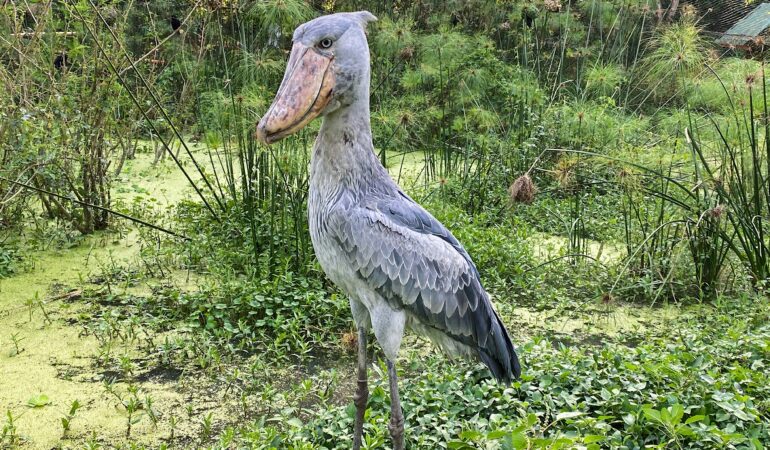
The swamp’s most famous resident is the shoebill stork, a large, prehistoric-looking bird known for its massive shoe-shaped bill, slow movements, and striking presence. However, Mabamba is also home to numerous other bird species, including papyrus gonoleks, African jacanas, malachite kingfishers, and swamp flycatchers.
The Shoebill Stork Experience
The highlight of any Mabamba Swamp boat trip is the search for the shoebill stork. This bird is one of the most sought-after sightings in African birding due to its rarity and unique appearance. Standing over four feet tall, the shoebill has a grey-blue body, piercing eyes, and a powerful bill adapted for catching fish, particularly lungfish, in shallow swamp waters.
Spotting a shoebill requires patience and expert guidance. Local birding guides use their deep knowledge of the swamp’s channels to locate feeding grounds where the bird is most likely to appear. Once found, visitors are carefully positioned at a respectful distance to observe without disturbing its natural behavior.
The moment of seeing a shoebill in the wild is often described as one of the most memorable wildlife encounters in Uganda, rivaling even some safari game drives in emotional impact.
The Mabamba Boat Trip Experience
A Mabamba Swamp boat trip typically begins early in the morning when bird activity is at its peak. Travelers are transferred from Entebbe or nearby lodges to the swamp’s launch site, where they meet local guides and board small wooden motorized boats or traditional canoe-style vessels.
The journey into the swamp is slow and quiet, allowing travelers to absorb the sounds of rustling reeds, bird calls, and gentle water movement. As the boat navigates narrow channels through thick papyrus, guides point out various bird species and explain their behavior, feeding patterns, and ecological importance.
Unlike fast-paced safari drives, this experience is intentionally calm and observational. The goal is not only to see the shoebill but also to appreciate the entire wetland ecosystem that supports it.
Best Time for Mabamba Swamp Birding
The best time for Mabamba Swamp birding is generally early morning or late afternoon when bird activity is highest and lighting conditions are ideal for photography. Shoebills are most active during cooler hours, often standing still in shallow waters while hunting for fish.
Seasonally, Mabamba Swamp can be visited year-round, but the dry seasons from June to September and December to February are often preferred due to more stable water levels and easier access routes. During wetter months, the swamp becomes even more lush, and bird activity increases, although navigation may require slightly more careful planning.
Because the shoebill is resident rather than migratory, sightings are possible throughout the year, although they are never guaranteed due to the bird’s wide-ranging movement within the swamp.
Bird Species in Mabamba Swamp
While the shoebill is the star attraction, Mabamba Swamp supports a rich diversity of birdlife that makes it a prime destination for Entebbe birding tours. Over 300 bird species have been recorded in the broader wetland system, making it one of Uganda’s top birdwatching hotspots.
Common sightings include papyrus gonoleks, African fish eagles, malachite kingfishers, purple herons, and swamp warblers. The swamp’s papyrus vegetation also supports specialized species that are rarely seen outside wetland environments.
For serious birders, Mabamba offers a high chance of adding rare species to their life lists, while casual travelers enjoy the variety and accessibility of sightings within a short boat trip.
Accessibility and Location
Mabamba Swamp is located approximately 40 kilometers west of Entebbe, making it one of the most accessible wildlife experiences in Uganda. Travelers can reach the swamp by road followed by a short canoe transfer, or by direct boat ride across Lake Victoria depending on weather conditions and arrangements.
This proximity makes Mabamba an ideal half-day or full-day excursion for travelers staying in Entebbe hotels or arriving early before starting longer safari itineraries.
For those beginning their Uganda journey, it offers an immediate introduction to the country’s biodiversity without requiring long-distance travel.
Conservation and Community Involvement
The Uganda shoebill safari experience in Mabamba Swamp is closely tied to community-based conservation. Local communities play a central role in guiding, boat operations, and wetland protection efforts.
Tourism revenue from birding trips supports livelihoods in surrounding villages, helping reduce pressure on wetland resources and encouraging sustainable conservation practices. Guides are often local residents who have grown up in the area and possess detailed knowledge of bird behavior and swamp navigation.
This community-driven model ensures that tourism directly benefits conservation efforts while maintaining the ecological integrity of the swamp.
Photography and Birding Tips
Mabamba Swamp is a highly rewarding destination for photography, especially for bird enthusiasts. Early morning light provides the best conditions for capturing the shoebill and other species in soft natural lighting.
Long zoom lenses are recommended for wildlife photography to maintain respectful distances from birds. Silence and patience are essential, as sudden movement or noise can disturb wildlife activity.
The reflective water surfaces and dense papyrus backgrounds create dramatic compositions, making Mabamba one of Uganda’s most photogenic wetland environments.
What to Expect on a Mabamba Birding Tour
A typical Mabamba Swamp birding excursion lasts between two and four hours depending on sightings and conditions. The experience is slow-paced and highly immersive, focusing on observation rather than movement.
Visitors should expect a combination of boat navigation through narrow channels, occasional stops for bird identification, and extended periods of quiet observation while searching for the shoebill.
Because wildlife sightings are natural and unpredictable, every trip offers a slightly different experience, making each visit unique.
Planning Your Birding Experience with Monumental Gorilla Tours
The Mabamba Swamp birding experience is one of Uganda’s most accessible yet rewarding wildlife activities, offering a rare opportunity to see the shoebill stork in its natural habitat. When combined with gorilla trekking, savannah safaris, or cultural tours, it becomes part of a complete Uganda wildlife journey.
Monumental Gorilla Tours organizes guided birding excursions to Mabamba Swamp, ensuring expert guiding, smooth transfers from Entebbe, and well-coordinated safari extensions across Uganda.